Test Scores Should Be A Conversation, Not A Number
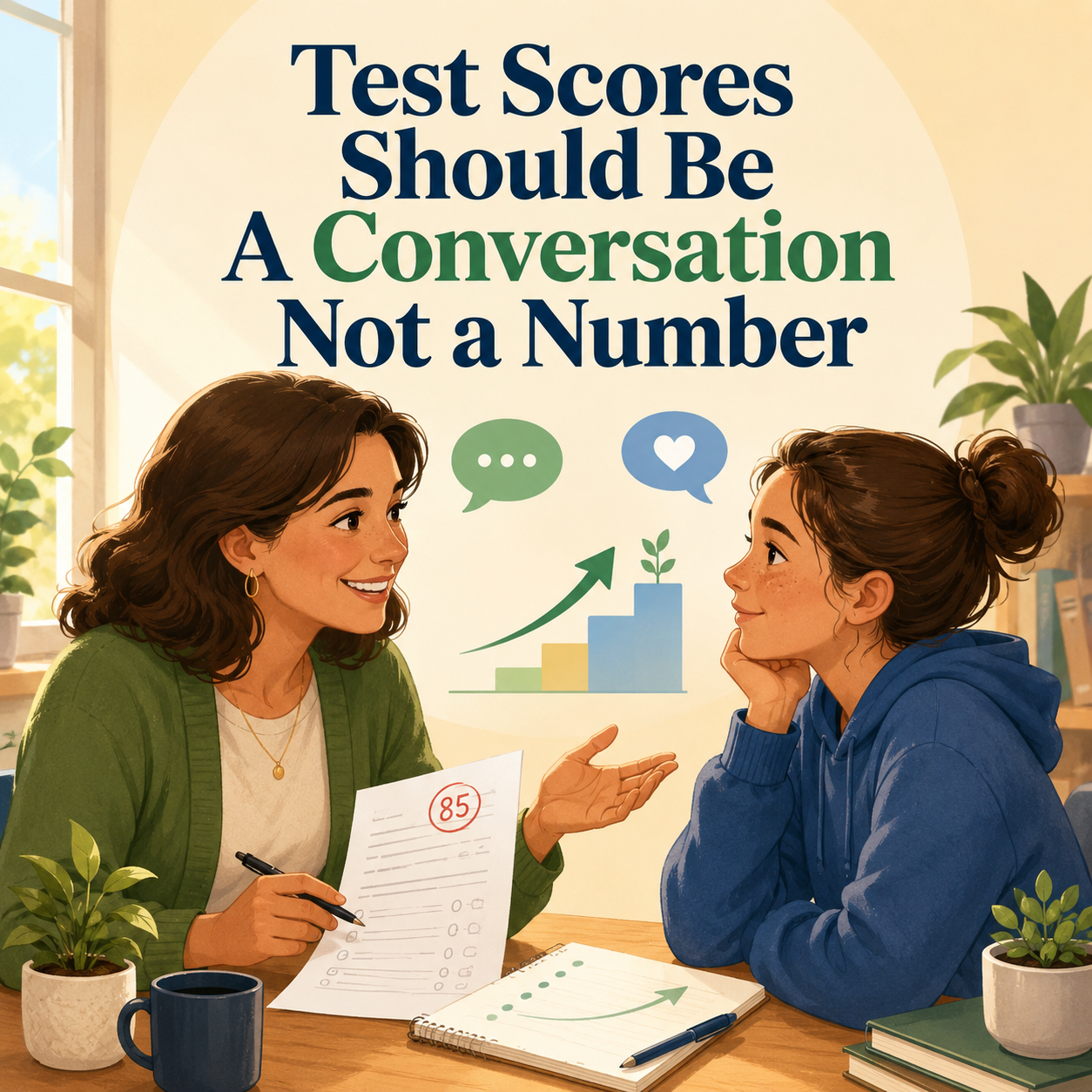
Image created by Chat GPT using my writing. AI generated image.
I don't know my doctor's test scores.
Seriously. I have no idea where she went to school, how she ranked in her class, or what she scored on her medical boards. And honestly? I don't care. What I care about is whether she listens when I talk, explains things in a way that makes sense, and actually helps me understand what happens next. I care about whether I trust her. I care about whether she's competent and kind.
Now, do I want my doctor to have passed her tests? Absolutely. Those credentials mean something. They matter. But I didn't choose her because of a number. I chose her because of who she is and how she shows up.
Same thing with my attorney. I have no idea how she did on the LSAT or what her law school GPA looked like. What I know is that she's prepared, she communicates clearly, she understands my situation, and she knows how to move me forward. That's what I pay for. That's what matters.
My dentist. My financial advisor. Same story. I can't tell you their test scores, and that's not why they're in my life.
So here's the real question: What do we actually value when we choose people to work with?
We value trust. Competence. Communication. Kindness. Wisdom. The ability to see where we are, help us get where we want to go, and explain what comes next. We value people who know their stuff but don't make us feel small in the process.
That's what a test score should do. It should be a tool for conversation, not a weapon. Not a ranking. Not a source of shame or fear.
A test score should tell us something useful. What did we learn about what's working? What needs attention? Who needs support? Who's ready for more challenge? What instruction actually landed? Those are the conversations that matter.
Ohio schools got their state test results this week. My daughter is taking AP exams. Another daughter is studying for the LSAT. My own district celebrated some genuinely strong numbers.
I used to see the anxiety that rippled through all of that. I watched students stress about the number. I watched teachers defend their instruction through the lens of a score. I watched schools chase percentages instead of understanding what those percentages meant. That fear was real. That anxiety was contagious.
But we moved beyond it.
When you stop treating scores like weapons, they become useful. When you stop using them to shame people, they become information. When you stop chasing them, they start telling you something real about your work. In my district, we have conversations now. Actual conversations. Not defensive ones. Not ones built on fear. Conversations where teachers look at data and say, "Here's what I see. Here's what worked. Here's what I need to adjust." Conversations where leaders ask better questions instead of making accusations. Conversations where students understand that a score is feedback, not a final judgment on who they are.
That shift changes everything.
Because when you're not drowning in anxiety about the number, you can actually think about what the number means. A student who passed for the first time isn't just a data point moving up. She's a student who now believes something is possible that she didn't believe before. A teacher who sees growth isn't just hitting a metric. They're seeing evidence that their instruction landed. A school that improves isn't just celebrating a higher percentage. They're understanding what systems and support actually work.
I gave out a lot of high fives this week. Not because of the numbers. Because of what the numbers represented. Because of the work. Because of the belief. Because of the instruction. Because of the students seeing themselves differently now. Because we talked about why it happened instead of just celebrating that it did.
The number is just evidence that something real happened. But the conversation is what turns that evidence into understanding. The conversation is what tells you what to do next. The conversation is what builds culture instead of just chasing metrics. Scores should never be chased like they're the goal, and they should never be used as weapons. They should be the starting point for conversations that move people forward.
What does this tell us about what's working? What does this tell us about what needs attention? What does this tell us about who needs support? What does this tell us about what students are ready for next?
Those are the questions. Those are the conversations. Those are what actually move schools and kids forward.
I want to know how you and your team talk about this. Are you still caught in the anxiety cycle, or have you found your way to conversations that matter? How do you celebrate growth without creating fear? How do you use data to get smarter instead of to get scared?
If your school or district is ready to move beyond the anxiety and into real conversations about culture, leadership, growth, and what actually matters, I'd love to speak at your event. This is about building schools where kids see possibility and leaders see people instead of percentages.
Leadership matters. Let's build something worth following.
~ Kelly
Kelly Croy is an author, speaker, and educator. You can sign-up for his email here. • Invite Kelly to speak at your event! • Explore the resources on his website: www.kellycroy.com. • Check out all of Kelly’s content here: https://linktr.ee/kellycroy